Showing posts with label Scale. Show all posts

Saturday, April 12, 2014

Looking Into the Past


When I started this blog I sought to share with everyone what might be considered "weird science". Not weird because it's not true, or it was discovered in some strange fashion but because the conclusions it gives us are not easy to accept into our daily lives.

The fact that the measured speed of light tells us that we are often looking into the past is one of those.

Let's start with some easy examples:

The Moon


The Moon is approximately 400,000 km (the amount of kms most cars end up going in their lifetime!) and speed of light is about 3 m/s, so the time it takes light to travel between Earth and the Moon is: 1.26 seconds.

So..if the Moon blew up, we wouldn't see the explosion for 1.26 seconds


The Sun
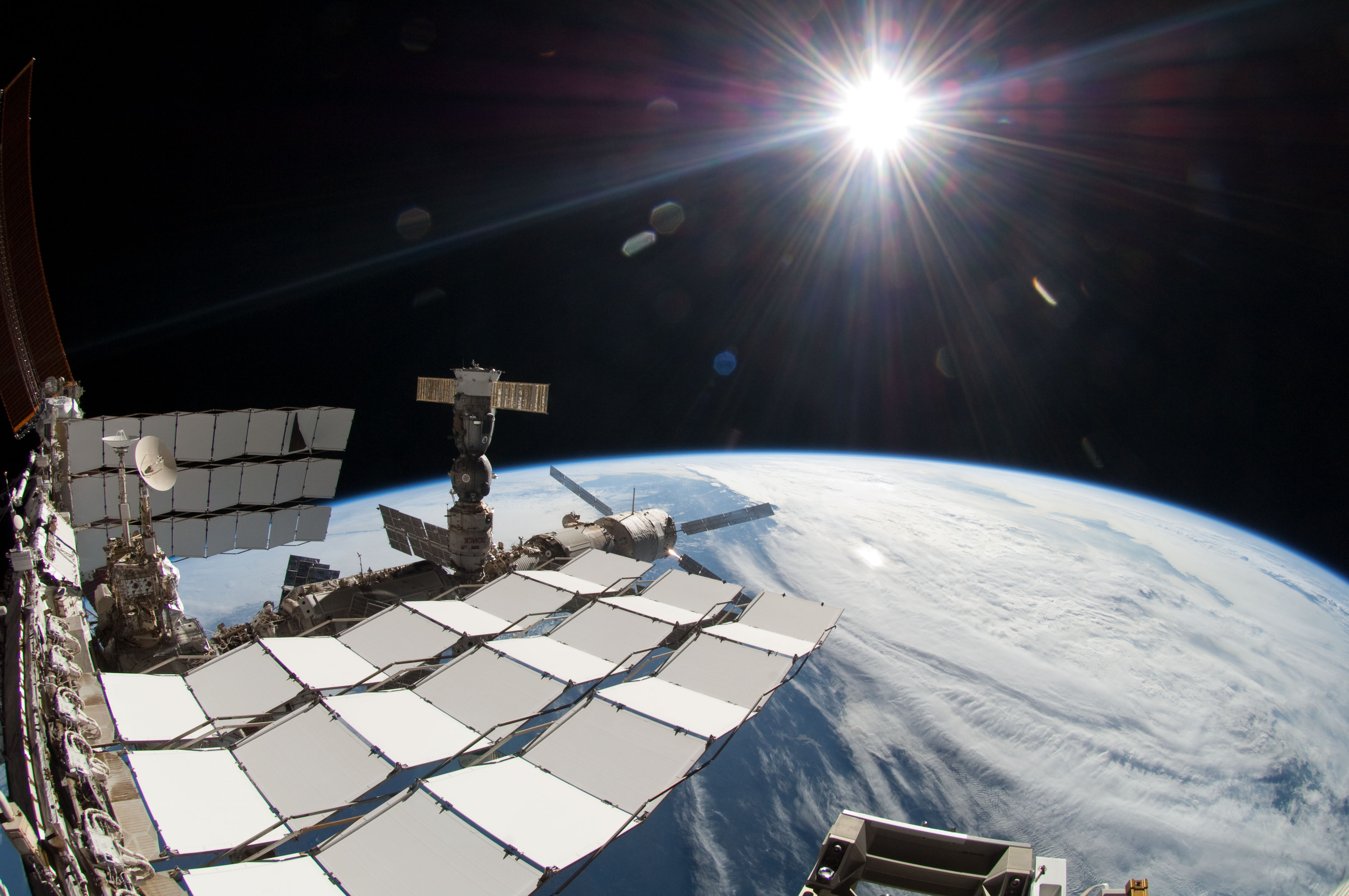
The Sun is about 150,000,000 km (no car can put that much on it's engine, not even a Honda) away from Earth. 

So ..if the Sun blew up, we would still see the Sun up in the sky for about 8.3 minutes


Everything Else

Just recently I talked about a famous image from the Hubble space telescope containing thousands of galaxies. Now, if we apply the concept above to these images we get an astounding conclusion:

The stars and galaxies we are seeing in all of these images are actually in the past, not a few seconds or minutes..but years and years into the past:


As you can see from the image above the further out a telescope captures an object the further back it is in time as far as we can see (i.e almost a billion years).

Basically the light waves from that object took a billion years to reach us, so we have no idea what it's current state is and we wont know for another billion years.

Just another example of #Scale.


Always in the Past

My final thought that I want to leave you with is this. If light travels at a certain speed and is not instantaneous, does this mean we're always seeing things in the past? The simple answer is yes.

But, it's so fast that for all intents and purposes it's instant (nanoseconds). Still something to think about when you see your friend waving at you from a distance...

Space Images

Space photography gives us some of the most breathtaking and awe inspiring photos in history. I figured it would be a travesty if I didn't explore it on my own blog!

My Favorites

Space Station transit across Moon
Photo Credit: Thierry Legault (http://legault.perso.sfr.fr/)
The International Space Station doesn't get nearly enough attention. I mean in light of all the fancy space ships in sci fi movies ... not many seem to accept that we've already got one out in space! Maybe it's because how hard it is to relate to it. So that's why this picture of the ISS flying in front of the moon is incredible. For a moment it's very much within our realm of perception.


The Hubble Deep Field

This one is one of the earliest images that captured my imagination. Released in the mid 1990s, this very dense image, filled with close to 3000 galaxies doesn't look very interesting but here's the kicker; the image represents a very very..very small section of the sky. It's about the size of a grain of sand held at arm's length. Yep, there's is a lot of stuff out there.
#Scale


Nice try Hollywood...

This last piece will be about a set of images actually. All credit goes to NASA for this. They thought it'd be neat to see if they had any images that resembled the photography in the 2013 movie Gravity. What an awesome idea. You can check them out here but here are some of the most striking ones:


Friday, April 11, 2014

The Ruthless Red Giant


It may sound like a typical villain in an upcoming children's film this summer, but it's far from that. This is the ultimate fate of our Sun; the next stage in it's natural life cycle.

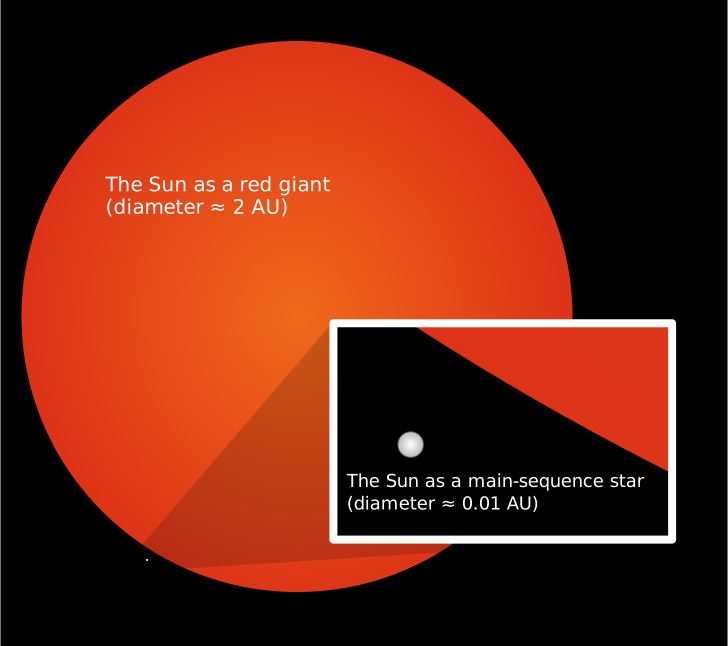
As the Sun ages it will use it will use up more and more of it's hydrogen core which will in turn increase it's size, luminosity and energy generated i.e the Sun will get hotter and larger. In fact in about 4.8 billion years the Sun will compare to its current size like this:


Yah that's a huge upgrade. And a huge problem for Earth. So big in fact that as I alluded to earlier...no life will survive.

But that's the ending of the story, how about the things that will happen along the way?
  • [50,000 Years from Now] Niagara Falls will continue erode into Lake Erie will no longer bexist
  • [50 Million Years From Now] Africa will be divided into two continents as Red Sea floods into the East African Rift
  • [250 Million Years From Now] All the continents may fuse back together into a supercontinent
  • [500-600 million Years From Now] Supercontinent breaks up 
  • [1 Billion Years From Now] Surface Temperature reaches 47 degrees celcius. Most water has evaporated. Most multicellular life has died out (yes that's us)
The Earth is 4.5 billion years old. 1 Billion years from now it will no longer sustain life. Therefore...the Earth has already been around more than 80% of it's expected life.

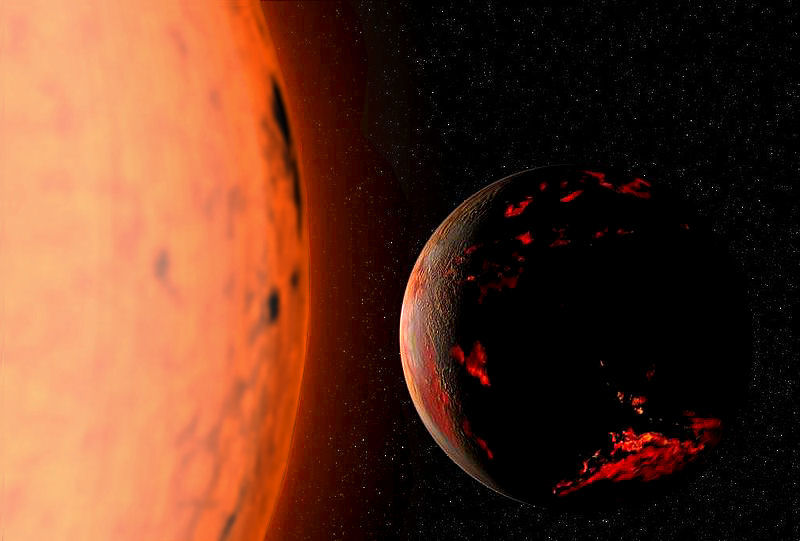
The earth post-destruction by the Sun
Takeaways

It's truly amazing that something that gave us life (The Sun) will also likely take it away from us. The Human Species has a very likely end date. Depending on what scale you look at things, things won't really stay the same...

Or..things will stay the same. 

Consider this, Humans (Homo Sapien) on Earth have only been around for about 400,000 - 250,000 years ago. That's not even a million years. The Earth has been around for 4.5 billion years. 

We've only been around for 0.003 % of Earth's existence. Therefore to us things really do stay the same.

Like I've said all along...it's all about Scale.


Tuesday, April 8, 2014

Collision Course

We're all headed for a gigantic collision....in a few billion years.


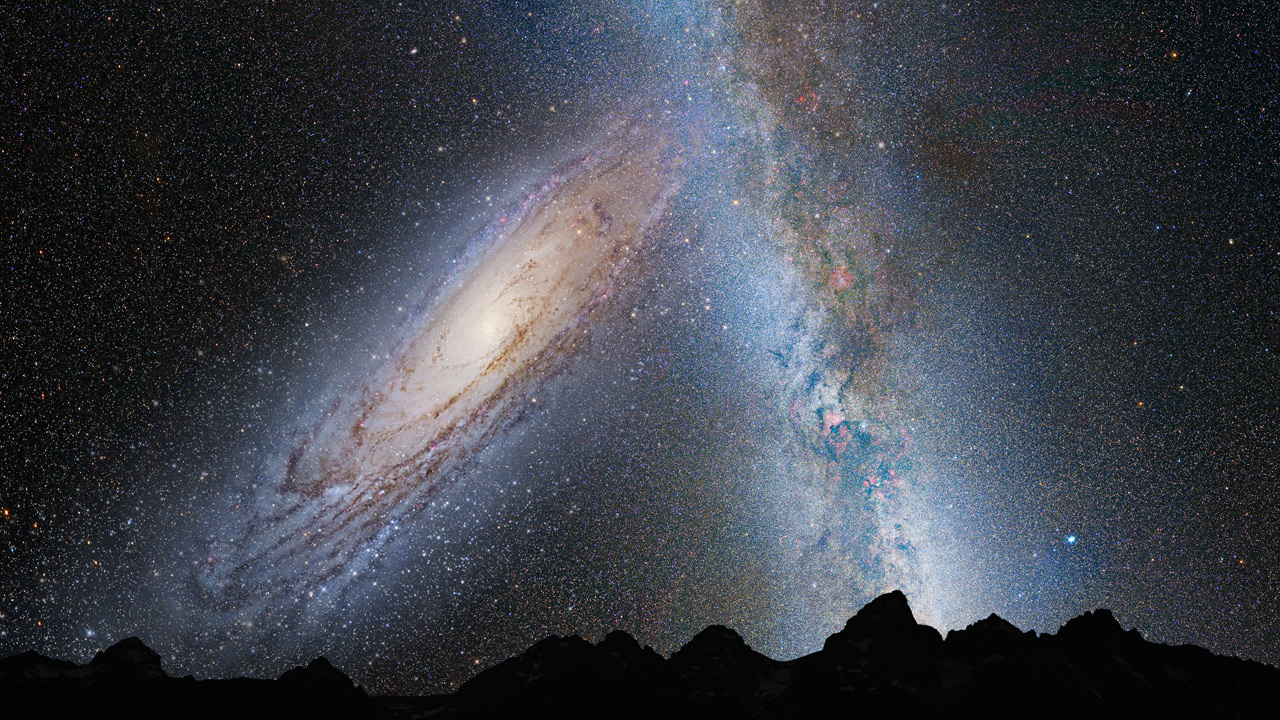
The view from Earth as the collision begins to happen
It's true. It's pretty much an accepted prediction that about 4 billion years from now (Earth itself formed 4.5 billion years ago) our Milky Way Galaxy is about to collide with one of our nearest neighbors; the Andromeda Galaxy. 

As horrible as it sounds and despite the fact that each galaxy containing billions of stars, the scale is so large that the stars are way too far apart to actually collide with each other. 

Expected views from Earth as the collision takes place..really really slowly (3 billion years)


But that doesn't mean there won't be drastic changes for us on Earth...(if we're actually around).

1) Our Solar system will likely get re-located some where further away from the center and this will likely change what the sky looks like
2) The collision itself will take about 3 billion years to complete
3) As the Andromeda Galaxy approaches closer and closer, about 3.75 billion years from now it will fill the sky much like the first image in the posting
4) Once the collision begins the sky will be filled with bright new star formation

It's bound to be an incredible light show that will alter human behaviour. Except here's the part I didn't tell you, 

Humans are likely not going to be around to catch it. Find our more in the upcoming Part 2 of this post.

Wednesday, March 12, 2014

Scale


Back in the 1990s, movies could be pretty hit and miss. Some (including myself) would even say that genres like sci-fi, fantasy and superhero have "grown up" in the current era. But that doesn't mean that they didn't have their moments of pure genius. Men In Black was a both a box office hit and a critical success. But for me the most memorable moment was this:


Wow. How novel an idea is that? Our entire universe...could actually be just a marble in the hands of some random alien. What this scene really did for me was help me realize how important and exciting the concept of scale was. 

The difference in size between a very tiny object (atom) and a very large one (the sun) is mind boggling. But what was even more interesting was something I like to call "Infinite Scale". This is the idea that as science advances we will find smaller and smaller objects (neutrino) and on the other end of the spectrum, larger and larger ones (Sloan Great Wall). 

But hey, why listen to me drone on about it when instead you could play around with an awesome flash animation made by a couple of apparently genius teenagers:


Wicked-Awesome? Thought so. But there's an even better example of scale much closer to home:


It would take 1.3 million earths to fill 1 sun (source)

Now that..admittedly...is a little terrifying, and really puts a perspective on how far we are from the sun to be able to see it as a friendly, yellow floating smiley face (instead of that very ominous monster above).

To top off my discussion about scale I will leave you with this. Scientists now tell us that the largest scale possible is the "End of Greatness" , where the universe looks the same in all directions, and there is no longer any sense of being able to tell one part from another. You've basically zoomed out so far that it all looks like one big homogeneous structure....


Kinda looks like a marble wouldn't you say?